EU terrorism situation and trends 2020

Europol has published the (TE-SAT) 2020 report, which provides an overview of terrorism incidents and developments in the EU during 2019.

Ten people died as a result of terrorist attacks in the EU, and 27 people were injured. All deaths and the injuries of 26 people were the result of jihadist attacks. Only one person was injured in a rightwing terrorist attack. In addition to these terrorist attacks, Germany reported two major violent extremist attacks that killed three people and injured several others. Outside the EU, 17 civilians from EU Member States died in a terrorist attack (in Sri Lanka on the 21st of April 2019).

In 2019, 1,004 individuals were arrested on suspicion of terrorism-related offences in 19 EU Member States, with Belgium, France, Italy, Spain and the UK reporting the highest numbers. The overall number of arrests decreased slightly for the second consecutive year in 2019, but the figures show that terrorism remained geographically widespread in the EU.

EU Member States reported that individuals imprisoned for terrorist offences and prisoners who radicalise in prison pose a threat both during their imprisonment and after release. In 2019 the failed attack on the 5th of March in a French prison, the thwarted 23rd of July attack on prison guards in France and the 29th of November attack in London by a recently released prisoner, are indicative of the threat. France reported that more than 500 terrorist convicts live in French prisons alongside 900 radicalised individuals. Between mid-2018 and the end of 2019, a total of four attacks in French prisons were foiled.

The total number of jihadism-related incidents in the EU decreased slightly (21 in 2019; 24 in 2018) but continued to be geographically widespread. Eight EU Member States suffered completed, failed or foiled jihadist terrorist attacks, the same number as in 2018.

As in previous years, the attacks specified as ethnonationalist terrorism represented the largest proportion (57 of 119) of all terrorist attacks. Their number decreased compared to 2018 (83).

In 2019 nearly half of all reported jihadism-inspired attacks and disrupted plots involved the use of explosives. Terrorists mostly aimed to target civilians and places of mass gathering. All jihadist bombing attacks failed or were thwarted by authorities.

In the EU, there is little evidence of a systematic nexus between crime and terrorism. Criminals and terrorists coexist in certain marginalised areas, within the same family structures or in prison, thereby enabling contacts and transaction-based cooperation. However, criminals are observed to be wary of terrorist suspects drawing attention to their activities. Skilled criminals are attractive recruits for terrorist groups.

_____

Aquest apunt en català / Esta entrada en español / Post en français

The COVID-19 pandemic has intensified cybercrime

This October, Europol published its 2020 cybercrime report, with updates on the latest trends and the current impact of cybercrime within the EU and beyond.

The global COVID-19 pandemic that hit every corner of the world forced us to reimagine our societies and reinvent the way we work and live. During the lockdown, we turned to the internet for a sense of normality: shopping, working and learning online at a scale never seen before. And cybercriminals took advantage of it to commit many different types of crimes.

Phishing remains an effective threat. Criminals use innovative methods to increase the volume and sophistication of their attacks. Criminals quickly exploited the pandemic to attack vulnerable people; phishing, online scams and the spread of fake news became an ideal strategy for cybercriminals seeking to sell items they claim will prevent or cure COVID-19.

Encryption continues to be a clear feature of an increasing number of services and tools. One of the main challenges for law enforcement is how to access and gather relevant data for criminal investigations.

Ransomware attacks have become more sophisticated, targeting specific organisations in the public and private sector through victim reconnaissance. While the COVID-19 pandemic has triggered an increase in cybercrime, ransomware attacks were targeting the healthcare industry long before the crisis. Moreover, criminals have included another layer to their ransomware attacks by threatening to auction off the comprised data, increasing the pressure on the victims to pay the ransom.

The main threats related to online child abuse exploitation have remained stable in recent years; however, the detection of online child sexual abuse material saw a sharp spike at the peak of the COVID-19 crisis. Offenders keep using a number of ways to hide this horrifying crime, such as P2P networks and encrypted communications applications.

Livestreaming of child abuse continues to increase, becoming even more popular than usual during the COVID-19 crisis when travel restrictions prevented offenders from physically abusing children. In some cases, video chat applications in payment systems are used, which becomes one of the key challenges for law enforcement as this material is not recorded.

SIM swapping, which allows perpetrators to take over accounts, is one of the new trends this year. Criminals fraudulently swap or port victims’ SIMs to one in the criminals’ possession in order to intercept the one-time password step of the authentication process.

In 2019 and early 2020, there was a high level of volatility on the dark web. The lifecycle of dark web marketplaces has shortened, and there is no clear dominant market that has risen over the past year. Tor remains the preferred infrastructure; however, criminals have started to use other privacy-focused, decentralised marketplace platforms to sell their illegal goods. Although this is not a new phenomenon, these sorts of platforms have started to increase over the last year.

_____

Aquest apunt en català / Esta entrada en español / Post en français

Fluctuating improvements to public safety in Honduras

Honduras has reported a decrease in criminal victimisation between 2014 and 2018. However, 13 out of every 100 Hondurans claim to have been the victim of a crime in 2018.

Despite the data, public safety is still one of the country’s main problems. Nevertheless, Hondurans believe it has become less of an issue in the last five years. Along these lines, 43 out of every 100 Hondurans considered public safety to be the main problem faced by the country during 2018.

A slightly higher percentage of men (13.4%) than women (12.1%) were victims of a crime in 2018.

The retrospective figures for homicidal violence in Honduras between 2013 and 2018 show a downward trend with a 36-point drop in the homicide rate per 100,000 inhabitants.

Quantitatively, the section of the population most affected by homicides during this period were men between 18 and 29 years of age. In 2018 specifically, this segment of the population accounted for 4 out of every 10 homicides.

Unfortunately, in 2018 the total number of recorded incidents increased by 22% compared to 2017. The figures rose from 31,612 crimes in 2017, to 39,463 in 2018. The indicators to experience a decrease were homicides (-3%), sexual offences (-0.5%), child abuse (-50%), injuries (-16%) and kidnappings (-13%). Property crimes were among the indicators to experience an increase, rising by 52% compared to 2017.

Another concerning figure in the section on property crimes is the sharp increase in extortion, which has doubled since 2015. It should also be noted that 72% of all crime reports were concentrated in just four municipalities.

The rate of violent deaths has continued to fall, decreasing by 46.5% 2018 compared to 2013. During this same period, the homicide rate in Latin America as a whole decreased by 7.7%. Therefore, despite the continued slowdown in the homicide rate in Honduras, the country’s figure was still twice that of the Latin American rate in 2018.

In 2018, 90% of the victims of violent deaths were men. And 41% of the victims of violent homicides were in the 15 to 29-year-old age group. Thus, the rate of violent deaths for men aged 18 to 29 years old is 3.4 times higher than the national rate of violent deaths.

Ten municipalities accounted for half of the country’s total homicides. On the other hand, 41 municipalities did not report any homicides during 2018.

With regard to sexual offences, in 2018, two out of three victims of sexual crimes were women under the age of 30. And 83% of reported sex crimes had female victims.

In domestic violence, eight out of ten victims were women aged 15 to 39. Similarly, 71% of domestic violence reports involved women between the ages of 15 and 39. Overall, 9 out of every 10 victims of domestic violence were women.

_____

Aquest apunt en català / Esta entrada en español / Post en français

Public safety in Guatemala continued to improve in 2019

The data for 2010-2019 was compiled from figures provided by the Guatemalan National Civil Police (PNC) and formalised by the Guatemalan National Institute of Statistics (INE).

During this period, the rate of violent deaths per 100,000 inhabitants maintained the downward trend of the current decade. By the end of 2019, it reached 21.5, representing the lowest rate of the entire period and almost levelling with the Latin American average (20.1). The reduced rate exceeds the target proposed by the Government’s 2016-2020 General Policy, which was to achieve a rate of 23.5 by the end of 2019.

Since 2010, the violent death rate has been following a steady downward trend. It has fallen by about half, from 41.8 in 2010 to 21.5 in 2019, representing a drop of 20.1 points.

Almost half of the victims of violent deaths in 2019 were young people between the ages of 18 and 30. The rate of violent deaths for this age group is 41.2 per 100,000 inhabitants, almost double the national rate.

In 2019, 85 out of every 100 victims of violent deaths were men. These male deaths decreased by almost 9% compared to 2018. Female violent deaths accounted for 15.4% of all fatalities in 2019 and decreased by only 3.2% compared to 2018. The overall proportion of female victims has increased from 11.1% in 2012, to 15.4% in 2019.

There were 33.2% fewer homicides in the first four months of 2020 than in the same period last year.

The overall incidence of crimes recorded in 2019 increased by 6.9% compared to 2018. This was mainly due to an increase in incidences of extortion, which rose from 29,497 in 2018 to 31,540 in 2019. Most worrying is the fact that in 2013 extortion accounted for 15% of all crimes, while in 2019 it accounted for almost half of the total number of crimes recorded by the PNC.

Since 2013, the number of reported extortions has practically tripled, which could be a result of increased trust in institutions, improvements in reporting mechanisms or a genuine increase in the criminal act.

Nevertheless, with the exception of the aforementioned extortions, incidences of all other crimes decreased compared to the previous year. The number of injuries has historically been higher than the number of homicides, but in 2019 there were fewer injuries than reported homicides.

Women experience a higher incidence of disappearances, rapes and domestic violence than men.

In contrast, the data on robberies and thefts showed 51.1 victims per 100,000 inhabitants, of which 8 out of 10 victims were men. Furthermore, 7 out of 10 robbery victims were aged between 18 and 40 years old.

_____

Aquest apunt en català / Esta entrada en español / Post en français

We need a European security ecosystem that encompasses the whole of society

In an increasingly complex world, the European Union continues to be widely regarded as one of the safest places in the world. This was made clear in the European Commission’s report to the European Parliament, the European Council and the European Committee of the Regions of 24th of July.

The Commission invited the European Parliament and the Council to endorse the EU Security Union Strategy as the basis for joint cooperation and action on security for the next five years.

The document explains that globalisation, free movement and the digital transformation continue to bring prosperity, make our lives easier, and spur innovation and growth. But alongside these benefits come inherent risks and costs. There are victims of terrorism, organised crime, the drugs trade and human trafficking, all direct threats to citizens and our European way of life.

Cyber-attacks and cybercrime continue to rise. Security threats are also becoming more complex:

  • They feed on the ability to work cross-border and on interconnectivity.
  • They exploit the blurring of the boundaries between the physical and digital world.
  • They exploit vulnerable groups, social and economic divergences.
  • Attacks can come at a moment’s notice and may leave little or no trace.
  • Both state and non-state actors can deploy a variety of hybrid threats.
  • What happens outside the EU can have a critical impact on security inside the EU.

The new EU Security Union Strategy lays the foundations for a security ecosystem that encompasses the whole of European society. It is based on the knowledge that security is a shared responsibility. Indeed, security is an issue that affects everyone. All government bodies, businesses, social organisations, institutions, and citizens must fulfil their responsibilities for making our societies safer.

Nowadays, security problems have to be viewed from a much broader perspective than in the past. We must overcome false distinctions between the digital and physical. The EU Security Union Strategy brings together the full range of security needs and focuses on the most critical areas for EU security in the coming years.

It also recognises that security threats do not respect geographical boundaries and that there is increasing interconnection between internal and external security. In this context, the EU must cooperate with international partners to safeguard the whole of the EU, and the implementation of the Strategy must be taken forward in full coherence with EU external action.

European security is linked to our fundamental values. All the actions and initiatives proposed in this Strategy will fully respect the fundamental European rights and values. These are the foundations of the European way of life, and they must remain at the core of all our work.

_____

Aquest apunt en català / Esta entrada en español / Post en français
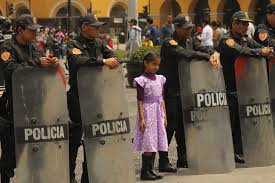
No improvements to public safety in Peru

Recent surveys on the perception of public safety conducted by the Instituto de Estudios Peruanos (IEP – Institute of Peruvian Studies) indicate that the Peruvian citizenry’s perception of its security did not change between 2015 and 2019.

However, despite the results of these surveys, statistics from the Instituto Nacional de Estadística e Informática (INEI – Peruvian National Institute of Statistics and Information) paint an entirely different picture. According to the statistics, the annual percentage of people who fell victim to crime dropped, from 36% in 2013 to 27.5% in 2018.

Despite this seemingly contradictory data, the citizenship professes it continues to feel afraid. The INEI itself has published the latest data from September 2018-February 2019, which unequivocally confirms that 86.6% of Peruvians believe they will fall victim to a criminal act. And that figure rises to 89% in the 30 to 44-year-old age group.

Analysing the perception of public safety by territories reveals several regions where more than 90% of the population are scared they will be targeted by criminals. Arequipa, for example, where the figure is 93.2%, the province of Lima where it stands at 92%, or Huancavelica at 91.3%.

Serious in-depth studies are needed to identify the reasons behind this lack of confidence in public safety. And this is confirmed by sociologist Lucía Dammert in her study on the perception of safety in Peru.

Dammert believes the constant changes of ministers and their teams, as well as the rotation of leadership within the Policía Nacional del Perú (Peruvian National Police Force), make it difficult to identify political strategies. It’s hard to evaluate the various initiatives and priorities due to the constant changes.

Another issue is that police coverage is insufficient, and citizens feel unprotected. Furthermore, the justice system is ineffective and levels of impunity are high. The prison system neither punishes nor rehabilitates, which means the police are forced to act harshly, and this is not an effective policy for dealing with the problem.

Notably, despite high levels of domestic violence, especially against women, citizens identify the street as the place where they feel most vulnerable. As a consequence, they choose to lock themselves in their homes and limit their lives on the street; a reality that’s problematic for democratic coexistence.

In addition, corruption is omnipresent in the country’s institutions, which need to build their legitimacy based on just and effective actions. Failure to achieve this leads to a general feeling of vulnerability.

Lastly, Peru sits at the apex of the main organised crime routes. Its citizens see how illegal markets such as mining, logging and prostitution continue to thrive. Yet, the country still refuses to adopt any public policies to deal with those issues.

_____

Aquest apunt en català / Esta entrada en español / Post en français

The number of prisoners in the United States continues to fall

According to the latest report published in August 2020 by the Bureau of Justice Statistics, the correctional population in the United States declined by 12.3% between 2008 and 2018.

During 2018, 6,410,000 adults were held under a correctional regime in the United States. This correctional population peaked at 7,339,600 in 2007 and declined every year until 2018. Between 2017 and 2018, the correctional population declined by 2.1%.

By the end of 2018, about 1 in 40 adult US residents were under correctional supervision, down from 1 in 32 a decade earlier.

Between 2008 and 2018, the imprisonment rate dropped 28% among black residents, 21% among Hispanic residents, and 13% among white residents. Notably, in 2018, the imprisonment rate of black residents was the lowest since 1989.

According to the data in the report, in 2018, 2,510 out of every 100,000 adult US residents were under the supervision of the North American correctional system. This marked a 26-year low in the adult correctional-supervision rate. For example, in 2008, 3,160 adults per 100,000 US residents were under supervision.

Also notable is the fact that, in 2008, there were 2,200 adults per 100,000 US residents under community supervision. By 2018, this figure had reduced to 1,730. With regard to the prison population, while in 2008 there were 1,000 adults in prison or local jails per 100,000 US residents, ten years later this figure had fallen to 830.

The adult correctional-supervision population fell from 4,508,900 in 2017 to 4,399,000 in 2018. The incarcerated population also decreased from 2,153,600 in 2017 to 2,123,100 in 2018.

In 2018, there were a total of 6,410,000 persons under correctional supervision in the United States. In 2008, that figure was 7,312,600. According to the latest statistics, in 2018 there were 4,399,000 adults under supervision in the community, 1,465,200 in prison and 738,400 in local jails.

Given the differences in data, in 2018, the authorities supervised 902,700 fewer adults than in 2008; 731,300 under community supervision and 143,100 in prison. The remaining cases are accounted for the reduced number of adults held in local jails.

_____

Aquest apunt en català / Esta entrada en español / Post en français

14 misunderstandings with regard to biometric identification and authentication

367.- baixaA few weeks ago, the European Data Protection Supervisor –EDPS–, and the Spanish Data Protection Agency – AEPD–, published a joint technical paper detailing 14 misunderstandings relating to the use of biometrics and on how these misconceptions can affect data protection.

The report, aimed at data protection controllers and managers, seeks to shed light on some of the most common misconceptions and inaccuracies associated with the use of the technology.

Identification is the process of identifying an individual among a group, and authentication is the process of proving the identity claimed by an individual. The increased use of biometric data (e.g. fingerprints or facial measurements) for identification and authentication purposes has led to a series of widespread misconceptions. Some of the most common misconceptions are listed below:

  • “Biometric information is stored in an algorithm”. An algorithm is a method, an ordered set of operations or a recipe and not a means to store biometric data.
  • “The use of biometric data is as intrusive as any other identification/authentication system”. Biometric data reveals more information about the subject. For example, it can include data on race, gender, emotional state, diseases and disabilities, etc.
  • “Biometric identification is accurate”. Biometric identification relies on probability. There is a certain rate of false positives (accepting an impersonator) and false negatives (rejecting an authorised individual).
  • “Biometric identification/authentication is precise enough to always differentiate between two people”. Certain situations, such as the identification of twin siblings or the environmental conditions in uncontrolled settings, can lead to an increase in the error rate and therefore, to confusion.
  • “Biometric identification/authentication is suitable for all people”. Some people cannot use biometrics because of their physical characteristics, injuries, accidents, etc. This factor can lead to social exclusion.
  • “The biometric identification/authentication process cannot be circumvented”. Techniques that allow you to “fool” biometric authentication systems and assume the identity of another person do exist.
  • “Biometric information is not exposed”. A person’s biometric characteristics are exposed and can be captured at a distance.
  • “Any biometric processing involves identification/authentication”. Not necessarily. There is a risk that security failures, regulatory changes, etc. can lead to the information being processed beyond the original purpose.
  • “Biometric identification/authentication systems are safer for users”. They are also susceptible to security breaches.
  • “Biometric authentication is strong“. The truth of this statement depends on the technology used and the circumstances, perception and culture of each user.
  • “Biometric authentication is more user-friendly”. This depends on the technology used.
  • “Biometric information converted to a hash is not recoverable”. It may be possible to retrieve the original biometric pattern.
  • “Stored biometric information does not allow the original biometric information from which it was extracted to be reconstructed”. A partial reconstruction sometimes has sufficient accuracy for another biometric system to recognise it as the original one.
  • “Biometric information is not interoperable”. On the contrary, biometric information systems are developed according to standards that ensure their interoperability.

_____

Aquest apunt en català / Esta entrada en español / Post en français


Human traffickers more ruthless than ever due to COVID-19

365.- baixaThe COVID-19 health crisis has led many countries around the world to close their external borders. In these circumstances, criminals are finding new ways to abuse the vulnerability of irregular migrants wishing to enter Europe and those victimised in labour or sexual exploitation schemes.

A few weeks ago, the European Migrant Smuggling Centre (EMSC) published a report that looks back at the operations supported in 2019, and the intelligence gathered to study the possible evolution of these crime areas in the upcoming months.

Enhanced border control measures and travel restrictions put in place throughout the EU have led to a shift in the smuggling activities from air to land and sea routes. Small boats are increasingly being used to cross river borders, for example, and there has been a rise in the use of freight vehicles and cargo trains to move people.

The travel restrictions may complicate the employment of seasonal labour in the agricultural sector, and the closing of establishments offering sexual services may increase sexual exploitation.

Some of the main threats identified by the EMSC include:

  • Attempts by the Turkish authorities to facilitate large groups of migrants towards and across the Turkish-Greek land border.
  • The transportation of migrants in life-threatening conditions hidden in concealed compartments of vehicles mostly in the Western Balkans region.
  • An increased use of fraudulently obtained visas and document fraud in general.
  • The increased vulnerability to abuse and violence of unaccompanied migrants along migration routes towards the EU.
  • The potential vulnerability to exploitation by traffickers of irregular migrants in remote locations.
  • Increased migrant transit within the EU.

Sexual exploitation is the most reported purpose for human traffickers in the EU, mainly with victims from Eastern and Central Europe and Nigeria. Nigerian criminal networks exploit their own nationals, recruited locally and indoctrinated through voodoo beliefs and rituals.

Highlights of the EMSC’s work in 2019 include:

  • 5,853 cases of human trafficking detected.
  • 19,211 suspects identified.
  • Nine far-reaching investigations.
  • Seven EMPACT Joint Action Days with 26 EU Member States.
  • 71 on-the-spot action days with Europol experts.
  • Development of five strategic intelligence reports.

_____

Aquest apunt en català / Esta entrada en español / Post en français


Report on the EU terrorism situation in 2019

363.- baixaEuropol recently published a report on the state of terrorism in the European Union. The report outlines trends and includes data on the attempts, attacks and arrests of alleged terrorists during 2019 in the EU.

As a consequence of these terrorist activities:

  • A total of 119 attacks, both foiled and completed, were reported by 13 EU Member States.
  • 1,004 individuals were arrested on suspicion of terrorism-related offences in 19 EU Member States.
  • The countries with the highest numbers of arrests were Belgium, France, Italy, Spain and the UK.
  • Ten people died, and 27 were injured as a result of terrorist attacks in the EU in 2019. Almost all were victims of jihadist attacks, although this type of terrorism continues its downward trend.
  • The situation in conflict areas outside Europe continued to impact the jihadist terrorism situation in Europe.

In 2019, several incidences of funding the return of foreign terrorist fighters were observed, although funding for terrorist groups outside Europe decreased in comparison to previous years.

The report focuses on right-wing extremist terrorist attacks, which increased last year, rising from one in 2018 to six in 2019. It highlights the fact that the attacks in Christchurch (New Zealand), Poway (USA), El Paso (USA), Baerum (Norway) and Halle (Germany) were part of a wave of violent incidents around the world, the perpetrators of which were part of similar transnational online communities and took inspiration from one another.

It goes on to explain that violent far-right extremists maintain international links through a range of events, such as concerts for example.

Left-wing and anarchist terrorist attacks reached the level of 2016 and 2017 after a decrease in 2018. All the attacks took place in Greece, Italy or Spain. Arrests for alleged extreme left-wing terrorist activity increased significantly; in 2018 there were 34 while in 2019 they tripled to 111, mainly due to arrests in Italy. These groups used readily available materials to make explosives.

The use of firearms and explosives remained prevalent in separatist terrorist attacks and violent attacks inspired by far-right ideologies.

Measures adopted by social media platforms to combat the spread of terrorist propaganda led some groups to return to traditional online communication methods. Suspects detained for terrorist propaganda in Europe sometimes had a long history of involvement in jihadist activities.

There is little evidence to suggest the existence of a formal, systematic link between organised crime and terrorism in the EU. Despite this, there are indications of certain transactions between low-level criminals and extremists, who often overlap socially in marginalised areas.

_____

Aquest apunt en català / Esta entrada en español / Post en français