Investigation into whether body-worn cameras are effective for police in Australia

The use of body-worn video cameras by police officers is an emerging area of interest for public policy and police practice. Police cameras can save both cost and time for police, influence law enforcement operational decisions and help prevent problems between citizens and uniformed officers. One objective of law enforcement cameras would be to optimise the collection of police evidence and improve the behaviour of both police and citizens.

The Western Australian Police Force is responsible for policing the 2.5 million square kilometres of this area, which has more than 150 police stations in eight metropolitan and seven regional districts. The programme implemented, as reported by the National Institute of Justice in the United States, ran for a period of 6 months from the beginning of 2022, and consisted of equipping all police officers working on the street with body-worn cameras. The result was more than 1.4 million uploads of evidence of the use of the video cameras. The programme, which relied on the deployment of this enhanced camera technology, was able to transmit live video images to command centres and staff members.

There were no statistically significant differences in restraining orders issued or assaults on police between police camera treatment days and control days (when no officer wore cameras). Treatment days had statistically significant rates of use of force, citizen complaints against police, and criminal charges compared to control days.

The review of this study focused on the collection of evidence and results of police-public behaviour. Outcome data were obtained from numerous operational data sets. A No Effects rating implies that programme implementation is unlikely to yield the intended results and may result in negative outcomes, as was the case.

There was no statistically significant difference between the mean duration of an audio recording of an interview on body-worn video treatment days compared to control days when cameras were not used. Nor were there any in the following cases: rate of assaults on police, criminal code violation notices or in rates of restraining orders issued by police.

Force use rates were higher on body-worn camera treatment days compared to control days. There was one use-of-force incident per 1,000 computer-aided dispatch jobs on treatment days and 0.7 incidences per 1,000 computer-aided dispatch jobs on control days. This difference was statistically significant and in the opposite direction to that expected.

Citizen complaints against the police were more frequent on camera treatment days compared to control days. There were 0.7 complaints per 1,000 computer-aided dispatch jobs on treatment days and 0.4 complaints per 1,000 computer-aided dispatch jobs on control days. This difference was statistically significant and in the opposite direction to that expected.

Criminal charge rates were higher on body-worn camera treatment days compared to control days. There were 139.2 criminal charges per 1,000 computer-aided dispatch jobs on treatment days versus 125.5 criminal charges per 1,000 computer-aided dispatch jobs on control days. This difference was statistically significant.

_____

Aquest apunt en català / Esta entrada en español / Post en français
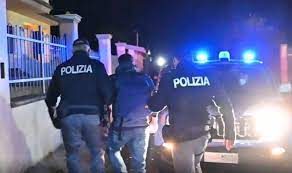
Franco-Israeli criminal network behind 38-million-euro fraud dismantled

The detainees laundered proceeds from criminal activities through a pre-existing money laundering scheme that involved several bank accounts in the European Union, China and Israel.

The joint investigation carried out with the support of Europol has led to the dismantling of a Franco-Israeli criminal network involved in large-scale fraud. The operation, led by France, included the Croatian National Police (Hrvatska Policija) , theCroatian Anti-Money Laundering Office (Ured za sprječavanje pranja novca), the French National Police (Police Nationale), the French Gendarmerie (Gendarmerie Nationale), the Budapest Metropolitan Police (Budapesti Rendőr-főkapitányság), the Israel Police (משטרת ישראל), the Portuguese Judicial Police (Policia Judiciaria) and the Spanish National Police (Policía Nacional).

The operational activities took place in the so-called five days of action, carried out between January 2022 and January 2023 in France and Israel, with the following result:

  • 8 house searches in France and Israel.
  • The arrest of the main organiser of the network in Israel.
  • 8 suspects arrested (6 in France and 2 in Israel).
  • The seizure of electronic equipment and vehicles, about 3 million euros from Portuguese bank accounts, 1.1 million euros from Hungarian bank accounts, 600,000 euros from Croatian bank accounts, 400,000 euros from Spanish bank accounts and about 350,000 euros in cryptocurrencies.
  • The total value of the seizures is estimated at around 5.5 million euros.
  • An international investigation into the 38 million euros is being undergone.

The criminal network, made up of French and Israeli nationals, targeted companies located in France. In early December 2021, one of the suspects impersonated the CEO of a company specialising in metallurgy, based in the department of Haute-Marne in north-eastern France. The fraudster asked the company’s accountant to make an urgent and confidential transfer of 300,000 euros to a bank in Hungary. The fraud was discovered a few days later when the accountant, thinking that they were acting on behalf of the CEO of the company, tried to make a transfer of 500,000 euros. The company filed a complaint and investigators later found that the call came from Israel.

The exchange of information and international cooperation facilitated by Europol led to the discovery of accomplices, modus operandi and funds. The criminal investigation in Croatia contributed to the discovery of the real identity of the money mules used by the criminal network. Croatia’s competent authorities blocked more than 600,000 euros in several bank accounts.

Since January 2022, Europol has facilitated the exchange of information and provided specialised analytical support, including financial and cryptocurrency analysis and knowledge. The analysis led to the identification of links between countries to enable the urgent seizure of criminal assets before suspects could launder them. During the days of action, Europol deployed experts to France, Hungary and Israel to cross-check operational information against Europol databases in real time and provide forensic support on the ground.

In 2020, Europol established the European Financial and Economic Crime Centre (EFECC) in order to increase synergies between economic and financial investigations and to strengthen its capacity to support law enforcement authorities to effectively combat this major criminal threat.

_____

Aquest apunt en català / Esta entrada en español / Post en français

Implementation of support services for small and rural police organisations in the United States

More than two-thirds (71%) of U.S. police agencies serve rural areas (fewer than 10,000 residents) and 75% employ fewer than 25 officers.

Meanwhile, there is a popular misconception that serious crime only occurs in urban areas, but police officers from small and rural agencies face the same daily challenges as their colleagues in urban departments, from community conflicts to traumatic events such as fatal vehicle accidents or homicides, and the same mental or physical health challenges.

Good mental health is as vital as good physical health in order for officers to serve and protect their communities from crime and violence, regardless of where they are in service. The U.S. Department of Justice has published a guide to implementing support services to small and rural police organisations.

Despite the welfare needs of rural police officers, many of these areas are like sanitary deserts, where the population-to-provider ratio for mental health care can be as high as 30,000 to 1. Compared to their urban counterparts, rural residents participate in mental health services at a much lower rate.

Small police departments often have limited staff and resources, inadequate emergency and community services, and very limited access to technology or equipment. Socioeconomic, geographical and workforce factors are significant barriers to access to health care in rural communities.

Regardless of the location or size of a law enforcement agency, the adoption of safety and welfare programmes is vital to ensuring the health of officers who put themselves in harm’s way to protect their communities.

Peer support programmes can be a vital mental health resource for small and rural agencies. However, the same geography and demographic factors that reduce access to other types of mental health support can also be complicated.

Peer support services are a valuable tool for promoting mental well-being in high stress jobs. It can be the way to tap into strengths and relationships between specially trained peers in a non-clinical setting. Faced with a personal crisis, an employee may feel more comfortable initially seeking support from a colleague who understands the context and has experienced the same problems, rather than a mental health professional.

Peer support can therefore be an important first step in an officer welfare strategy. This resource would describe considerations and recommended action steps for rural and small police seeking to establish and maintain peer support services.

These different considerations can be adjusted to suit the unique goals of each agency according to its starting point.

_____

Aquest apunt en català / Esta entrada en español / Post en français

Canadian police officers succeed in making body-worn and in-car video systems permanent

As reported by the Canadian website City news everywhere, the Waterloo Regional Police Service South Division launched a large-scale pilot project to install body-worn and in-car video systems a few months ago, as part of an overall modernisation project for the institution.

The pilot project, developed between June 2021 and October 2022 and which deployed body-worn video systems for police officers and inside cars, will now become a permanent fixture following its approval at a police services board meeting last week. The project also includes a mobile phone deployment strategy and a digital evidence management system.

Through members of the police service, trained for the occasion, the purpose of the pilot scheme was to determine the feasibility and capability of the technology to capture evidence while balancing the privacy rights of citizens.

Key performance indicators for the pilot plan focused on both police member and community perceptions, administrative workload, and the impacts of charges and convictions.

The overall aims included exploration of improved police accountability, accurate representation of police interactions with the public, improved public and officer safety, a strengthened commitment to bias-free service delivery, and improved evidence for investigative, judicial, and oversight purposes.

The pilot project also included a consultation with the community and members of the police service through a webinar, a general survey and a direct invitation to the cultural communities in the region.

Police members of various positions felt that there is clear support for promoting a definitive programme to install cameras for police service. The community also felt that this was a good financial investment, that this will improve transparency and that the programme will reinforce the commitment to bias-free policing. And in this way, technology will help create a foundation of trust building for the police with the community.

It was also felt that it will improve transparency with the community, which will help protect them with public complaints and provide evidence for the courts.

Finally, it was decided to make the pilot scheme permanent, as the vast majority of respondents felt that video technology is highly valued as an investment tool to contribute to a transparent, effective and professional policing community.

_____

Aquest apunt en català / Esta entrada en español / Post en français

International police cooperation measures against cybercrime

It is well known to law enforcement that DDoS services – distributed denial of service – have considerably lowered the barrier to entry into cybercrime. For a fee as low as about €10, any unskilled person can launch DDoS attacks at the click of a button, taking entire websites and networks down.

The damage that can be inflicted on victims can be significant, even crippling businesses economically and depriving people of essential services provided by various entities such as banks, police forces or government administrations.

Emboldened by a perceived anonymity, many young technology enthusiasts engage in this seemingly low-level crime, unaware of the consequences that such online activities can entail. For example, law enforcement agencies are working intensively against DDoS services. And, in this regard, all levels of users are on law enforcement’s radar, whether it’s a gamer ripping the competition from a video game or a high-level hacker conducting DDoS attacks against commercial targets for financial gain.

The effects that a criminal investigation can have on the lives of these DDoS users can be very serious, given the prison sentences that are contemplated in some countries.

In this vein, police forces from the United States, the United Kingdom, Poland and Germany developed an operation known as Power off against this type of cyber-attacks that can paralyse the Internet.

This international operation aimed at combating DDoS service providers, designed to allow users to launch a parallel distributed denial of service against critical online infrastructures, has enabled about fifty of the world’s largest illegal IT service providers to be disabled. One of these neutralised services had been used to commit more than 30 million attacks.

As part of this action, seven administrators have so far been arrested between the United States and the United Kingdom, with further action planned against users of these illegal services.

International police cooperation was critical to the success of this operation, as the administrators, users, critical infrastructure and victims were dispersed around the world. Europol’s European Cybercrime Centre coordinated activities in Europe through its Joint Cybercrime Action Taskforce (J-CAT).

This international operation follows previous editions of Power Off operations that targeted administrators and users of the webstresser.org DDoS marketplace.

_____

Aquest apunt en català / Esta entrada en español / Post en français

Resignations of police officers increase by 72% in the last year in England and Wales

In early November this year, a study appeared in the digital journal The Conversation in which English professors of Criminology at the University of Portsmouth, Jemma Tyson and Sarah Charman, delved into the causes of the increase in resignations of police officers in England and Wales.

The authors explain that being a policeman had for many years been a job for life. There were very low dropout rates and high loyalty rates, where careers of 30 years or more were the norm. But it seems the tables have turned.

According to official government data, the number of voluntary resignations from the police service in England and Wales has risen by 72% between 2021 and 2022, from 1,996 to 3,433 dropouts. In addition, voluntary resignations currently account for 42% of all police drop-outs, up from 33% the previous year. And when compared to ten years ago, in 2012, there were 1,158 voluntary resignations, representing only 18% of all who resigned. Therefore, in just ten years voluntary resignations have increased by 196%.

What in 2016 was regarded as a positive turnover by the National Council of Chiefs of Police is now a serious problem. Both authors of the study felt that they should investigate the reasons why staff leave. For two years they interviewed about 100 former police officers from England and Wales who had voluntarily left the service.

The main motivation for leaving work are internal and organisational problems, amongst others: former officers complained of poor leadership, lack of opportunities for promotion or progression and no voice in the organisation. The policemen who had left the organisation stated that they did not feel valued and lacked appropriate models in the higher ranks. In particular, female officers with children complained.

The former officers interviewed stated that they had felt they were just a number to the police force and that their voices were not heard. They also did not feel that they could share their views or participate in decision-making on issues that affected them in their daily work, as they felt that chiefs spent time focusing on their own careers and concerns.

That feeling of insignificance was also shared by police who were sent to unwanted sites after being promoted, returning from an absence or due to restructuring within the organisation.

The researchers also found that most interviewees replied that their decision to resign was the right one, but that did not take away from the disappointment, regret and sadness they felt when they left.

These feelings of a lack of support from the organisation are compounded by the lack of meaningful exit interviews. Only 35% of the officers interviewed were offered the possibility of an exit interview.

Understanding why there has been a 196% increase in voluntary resignations from the police service in England and Wales over the past decade may be a painful task for many police forces, but without that information, retention can only get worse. Starting those tough conversations and providing those who leave with the voice they lack within the force is the first step in solving the problem.

_____

Aquest apunt en català / Esta entrada en español / Post en français

COVID-19 measures lead to a slight increase in violence against police in Germany

In 2021, 39,649 violent acts against the police were recorded in Germany. This represents an increase of 1.8% compared to the previous year, and the continuation of a slight upward trend since 2014 (with the exception of 2017). The Länder with the largest increases were Mecklenburg-Western Pomerania (31%), Hesse (19.1%) and Berlin (15.4%), while Baden-Württemberg (-2.1%) and Bavaria (-6.3%) experienced declines. Interestingly, the latter experienced the highest number of murders (4 cases, 6 victims[1]) and violent robberies (20 cases, 25 victims).

There were 88,626 victims of this crime (4.5% more than the previous year), of which 79.3% were men, and 49.5% were between the ages of 25 and 35 years old. The vast majority of violent acts (87%) occurred as resistance to police interventions.

The aggressors were mainly male (84.2%), German (70.6%) and over 25 years old (69.6%). 75.6% of those arrested were persons known to the police. The percentage of immigrants detained for these offences fell by 9.6%, while that of illegal residents and asylum seekers fell by 5.2%.

The criminal typologies of the attacks include murder, homicide, injuries (intentional and negligent), violent robbery, coercion, illegal detention, threats, resistance, and attacks on law enforcement officers. However, it should be noted that the crimes with the highest rate of violence decreased: murder (-6), homicide (-27), violent robbery (-27) and simple or minor injuries (-612). The most significant increases are found in resistance against authorities in the exercise of their duties, in its different versions (48%).

The clearest cause of this increase seems to be the restrictive mobility measures decreed to combat COVID-19, which were frequently contested by the population. The increases in violent acts coincide (with some exceptions) with the months in which tighter restrictions were in place due to the pandemic.

Access to the complete report 


[1] The murders were not necessarily consummated.

_____

Aquest apunt en català / Esta entrada en español / Post en français

Pending improvements to the British police complaints system

In February 2022, the UK Parliament’s Home Affairs Committee published a report on complaints handling and the police behaviour review, in which it identifies significant gaps. The investigation to evaluate the performance of the Independent Office for Police Conduct (IOPC) began in the summer of 2020 and lasted 18 months. The IOPC, which has the primary role of overseeing the most serious cases of complaints against police officers and police forces in England and Wales, and which may therefore carry disciplinary liability, became operational in January 2018. However, it is not a completely new body, as it replaced the Independent Police Complaints Commission (IPPC), which was created in 2003 and replaced the Police Complaints Authority (PCA). These previous changes were made in an attempt to improve the handling of the complaints.

MPs recall that police performance in England and Wales is based on consent: officers have the power to investigate crime and maintain public safety, but have a duty to comply with the highest standards of police behaviour. Therefore, to ensure that the public trusts the police, there must be a good system in place to manage and monitor the behaviour of the officers and the force, and the complaints that are filed.

The research concludes that some of the dissatisfaction with this system is unjustified or unfair, and that the IOPC has made significant progress and has established a more open, transparent and responsive system than previous bodies. However, there is still room for improvement in six areas:

  • Duration of investigations: Although the majority are resolved in less than a year (and this duration has been reduced with respect to previous bodies), there are still procedures that drag on for years, without it being clear whether this is the police forces’ or the IOPC’s responsibility. Therefore, a change in police culture is needed to streamline these procedures and for all parties to assume their responsibilities.
  • Citizen confidence: Some reviews of specific areas (such as domestic violence, mental health, or racial discrimination) provide insights into how the police interact with the communities they serve. However, in these major investigations there needs to be greater collaboration between organisations and police forces, and the procedures need to be made accessible to the public.
  • Accessibility: Promoting citizens’ awareness of these procedures is not just a matter of being able to access documents. The use of technical language or complex constructions also hinders or discourages public access. Therefore, IOPC should make efforts to make documentation available in simple vocabulary and in different formats and languages.
  • Ensure best practices: Some of the procedures are managed by police forces, but it is not clear whether all of them follow IOPC guidelines. Therefore, this should be monitored and the recommendations should be followed.
  • Governance of the IOPC: The tasks of those responsible for the IOPC still carry over some dysfunctions from previous bodies and, although the new structure has brought about positive changes, there are still shortcomings, such as in internal supervision. Therefore, it urges the government to review the structure of the organisation and to incorporate an independent head to the governing board.
  • Police and Crime Commissioners: They are elected officials whose function is to supervise the police forces of the territorial districts where they are elected. The parliamentary inquiry has found that, despite the fact that part of their functions are related to the supervision of disciplinary complaints and sanctions, only a minimal part of these positions have high compliance with these functions. Therefore, they need to have more resources in order to be able to cope with these tasks as well.

Press release on the publication of the report in the UK Parliament:

https://committees.parliament.uk/committee/83/home-affairs-committee/news/161387/progress-made-but-many-still-feel-let-down-by-police-complaints-system/

_____

Aquest apunt en català / Esta entrada en español / Post en français

The rush to recruit police officers poses a very significant risk

Boris Johnson’s pledge to recruit another 20,000 police officers increases the risk of admitting officers with misogynistic, racist or homophobic behaviour, all amid concerns that there is a discriminatory culture in police forces in England and Wales.

Currently, the police in England and Wales are dealing with a number of problems, including the aftermath of the murder of Sarah Everard by a police officer, in an attempt to rebuild public confidence.

As published by The Guardian, an internal police report highlighted warnings that the sheer scale and speed of the 20,000-strong recruitment campaign inevitably carries risks, adding that there is a real danger that people unfit for the police force could slip through all the filters and be recruited.

In parallel, the paper considers that the system fails when, on occasion, organised crime groups attempt to infiltrate the police, which can have catastrophic consequences. When unsuitable applicants lie on application forms, hide their social media activity or downplay their criminal connections, the verification quality must consistently be strong.

If, during the probation period, an agent exhibits behaviour such as homophobia, racism, misogyny or dishonesty, it must be taken very seriously. If you just say well, they’ll be a good cop, we’ll polish them up, you’re protecting a problem that could last 30 years.

The report also exposes other issues, such as:

• Fraud has increased exponentially and continues to be mistakenly treated as a low priority by many police forces.

• The local accountability model has severed some relationships between police and politicians, and has left some police chiefs lacking confidence in their operational independence.

• The fragile architecture of having 43 police forces, devised in 1962 and implemented in 1974, is far from being fit for purpose in 2022.

Cybercrime is now by far the most prevalent type of crime. Considering that our children were unsafe if they were on the street, they are now more unsafe in their own rooms.

• Public expectations to fight crime cannot be met without sufficient funding, and the public, through politicians, must decide how much threat, harm and risk they are willing to tolerate.

Significant shortcomings in the police force persist and must be addressed. Crime is now often complex and much more sophisticated, and investigations can take much longer. If the police continue to use 20th century methods to try to cope with 21st century technology, they will continue to fall further and further behind.

Finally, the paper considers that the seriousness of the problems that the police service is now faced with should not be underestimated, but that the public should be reassured by the firm, pragmatic and professional approach of police officers and personnel.

_____

Aquest apunt en català / Esta entrada en español / Post en français

Counterfeit tobacco production flooding the French market dismantled in Slovenia

A tobacco production line that has filled the French market with millions of counterfeit cigarettes has been dismantled in Slovenia as a result of a complex investigation between the French and Slovenian authorities with the support of Europol.

Launched in October 2020, the investigation focused on an organised crime group involved in illicit tobacco production and distribution. After two successful action days in France in April and May 2021 targeting criminals involved in the distribution of these counterfeit cigarettes, the Slovenian authorities launched an investigation with the aim of arresting the suspects responsible for the production of these illegal products.

Following several coordination meetings between the French and Slovenian judicial and law enforcement authorities, under the supervision of Eurojust and Europol, it was agreed to organise an action day in Slovenia.

On January 25, 2022, more than one hundred officers of the Slovenian National Police Force (Policija) and Financial Administration (Finančna Uprava) raided eleven properties, including industrial premises and private residences. They were assisted in the field by officers of the French Gendarmerie (Gendarmerie Nationale), as well as by French magistrates of the Bordeaux Interregional Specialised Court (JIRS) and Europol officers.

This action made it possible to find different production sites set up in warehouses located in remote areas of Slovenia. In total, more than 26 tonnes of tobacco were seized, as well as 29 million filters, several machines for the manufacture of tobacco and ten tonnes of printed papers for packaging. The number of cigarettes that could have been produced with the seized goods would have had a value of 13 million euros on the French market.

Earlier in the same investigation, in November 2021, the Slovenian Financial Administration had seized an additional 12 tonnes of fine-cut tobacco.

Two leaders of the criminal network in charge of cigarette manufacturing were arrested under European arrest warrants, one in Croatia and one in Slovenia.

Europol’s European Financial and Economic Crime Centre (EFECC) supported the investigation by providing its secure communication platform and facilitating international cooperation between France, Slovenia and other member states, cross-checking and providing analytical support and operational expertise. One of its experts was sent to Maribor (Slovenia) to assist the national authorities on the same law enforcement action day.

_____

Aquest apunt en català / Esta entrada en español / Post en français